

Come Along
I'm going to take you away to a place I know where I have found peace of mind...

Assagai (as-uh-gahy) — A slender, iron-tipped, hardwood spear used chiefly by southern African peoples.

I’ve been sitting, staring at this blank, white Google Doc for far too long.
The voice in my head keeps asking… “Where do I start?”
I’m finding it difficult to know where and how to begin to describe the genius of the African jazz rock band, Assagai, as their huge, eclectic sound is so abstract to Western ears.
How can I put such vibrant music into words and still do it justice?
So, let me try to take you to London in 1970, when a group of exiled South African and Nigerian musicians formed to capitalize on the rise of “Afro-Rock,” mainly due to the huge success of Osibisa, and pride in the Black Diaspora.
As a term, “Afro-Rock,” was first used in the late 1960s to describe rock music that incorporated traditional African rhythms, harmonies, melodies, and instruments. Formed in 1969 in London by a group of exiled Ghanaian and Caribbean musicians, Osibisa emerged as the most prominent and successful Afro-Rock band.
What Osibisa did for African music can't be overstated enough. In many respects, Osibisa has done for African music what Santana has done for Latin music. By brilliantly mixing their “criss-cross rhythms that explode with happiness” with rock and roll, Osibisa introduced the Western world to African music.
Yet, in a short period, Assagai quickly became “the second best-known African group of the late 60s/early 70s in Britain." Vertigo Records wanted them, and to this day, they remain the only Black band ever signed to the legendary, swirling record label. However, to finalize the deal, Assagai’s management and production team, Mother Mistro, insisted that if Vertigo were to sign Assagai, they also had to sign the British progressive rock band, Jade Warrior. Reluctantly, Vertigo agreed to the package deal to secure Assagai, but ultimately, it was Jade Warrior who sold significantly more records and made far more money for the record label.
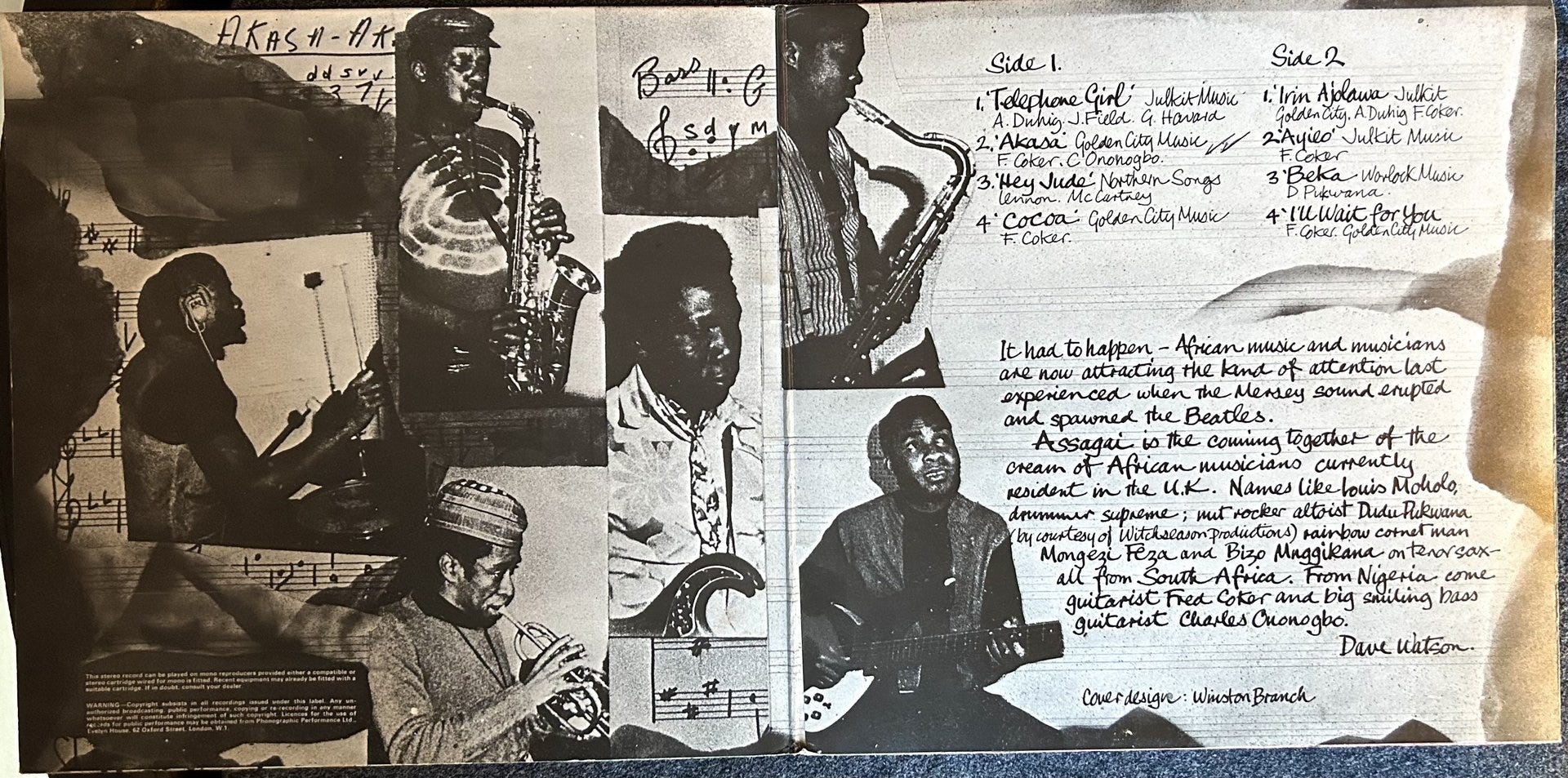
The original Assagai band consisted of five members, three from South Africa and two from Nigeria: alto saxophonist/pianist Dudu Pukwana, trumpeter/flutist Mongezi Feza, drummer Louis Moholo, tenor saxophonist Bizo Mngqikana, and guitarist Fred Coker.
I first wrote about the great South African jazz musician Dudu Pukwana in this piece, which emphasized finding hope more than it focused on the musician himself. But it served as my introduction, as I knew eventually, I would return and write about the mighty Assagai.
Beginning his musical journey in South Africa, Pukwana received an invitation from Chris McGregor to join The Blue Notes, performing alongside Mongezi Feza, Nikele Moyake, Johnny Dyani, and Louis Moholo. Faced with increasing harassment from authorities due to the prohibition of multi-racial groups during apartheid, The Blue Notes fled to Europe in 1964. Playing primarily in France and Zürich before settling in London, they eventually became part of McGregor’s Brotherhood of Breath in 1970.
Having moved towards a new free jazz sound in the Brotherhood of Breath, Pukwana and his bandmates wanted to honor their nationality and encourage fellow Africans to embrace their identity by creating jazz that combines Kwela and Marabi with traditional African rhythms. Drawing inspiration from Osibisa and the rise of Afro-Rock, the Black Power Movement in the United States, and the protests against the Vietnam War, they were convinced their music would challenge the apartheid regime in the hopes of fostering change.
It was a bold mission, but with the rise of Afro-Rock and Black Power and by incorporating dynamic electric guitar not found in Pukwana's or Feza’s earlier work, they believed it could be achieved.
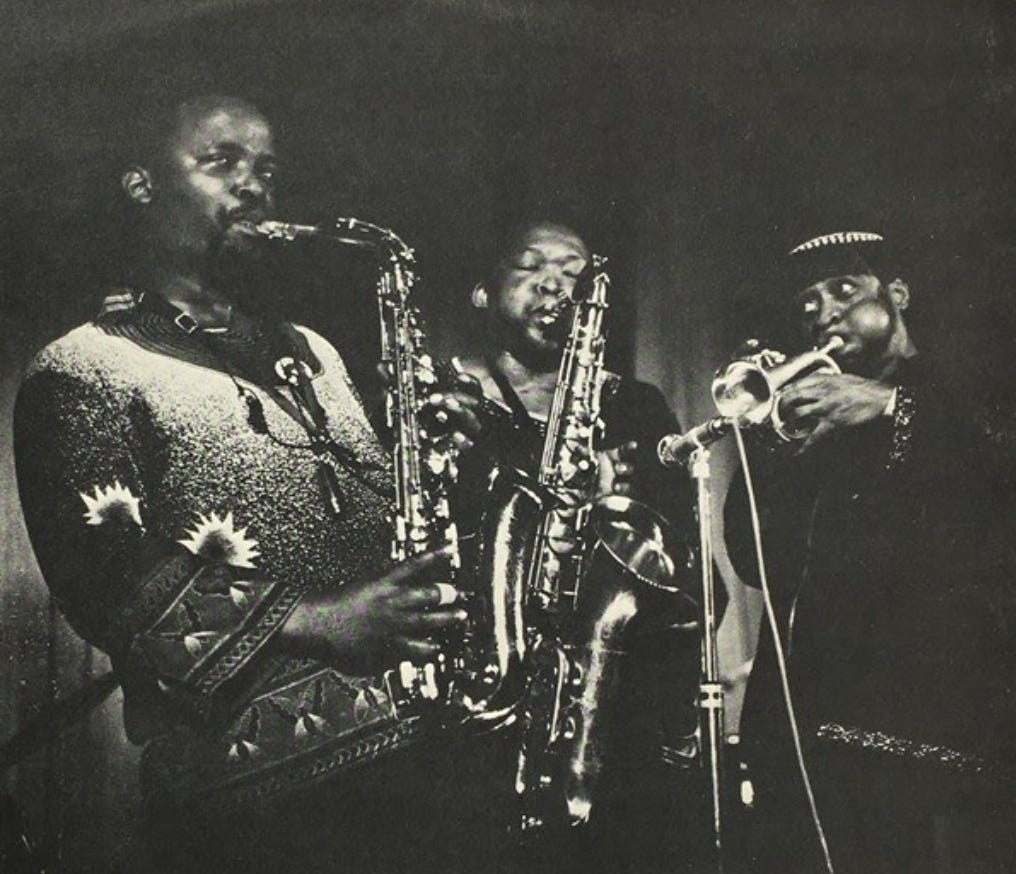
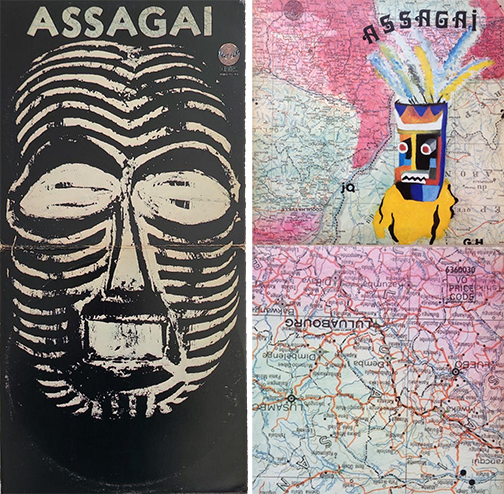
Assagai and Jade Warrior also had a tighter connection than just being represented by the same management and signed to the same label. Assagai covered a few of Jade Warrior's tracks, and Jade Warrior also features as the backing band on both of Assagai’s albums. Releasing just two albums in 1971, the first self-titled LP contained their fantastic, and much faster, rendition of Jade Warrior's "Telephone Girl," sung by Warrior bassist Glyn Havard. By far, the most traditional rock song on either album, it’s, without a doubt, a killer track and an easy choice for their first radio single.
However, the band’s sound is really highlighted on the second track, ‘Akasa,’ written by Fred Coker. Coker's scintillating guitar work is outstanding as it squalls through manic percussion, propelling the rhythms. Pukwana's piano and the punchy brass instruments invite listeners into a unique polyrhythmic African highlife jazz experience that feels distinctly different from Osibisa, let alone anything from Fela Kuti.
Next up is their completely unorthodox, almost Calypso version of ‘Hey Jude,’ sung in the Yoruba dialect, which is easily the wildest cover of the song you will ever hear.
Coker's subtle use of wah on Side One’s closer, 'Cocoa,' is another colorful highlight on this mesmerizing album. The second side begins with the enchanting riff of 'Irin Ajolawa,' written by Coker and Jade Warrior’s guitarist, Tony Duhig. It is accompanied by fiery percussion and soothing, but repetitive, African harmonies. The side also includes a traditional African folk song, 'Ayieo,' and Pukwana's own 'Beka,' which elegantly showcases the Kwela sound he wanted to bring to the band.

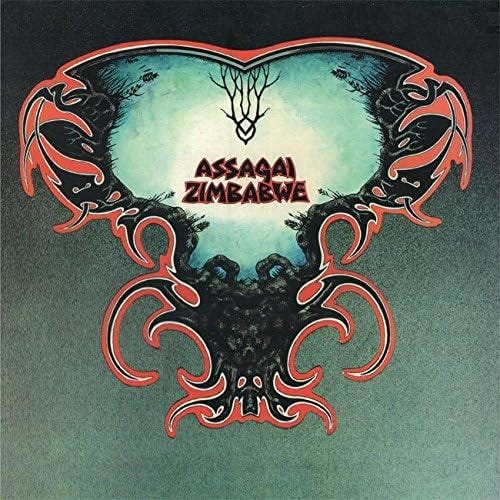
While the first record is impressive and an excellent debut, Assagai's second album takes things to an entirely new level. Having lost Nigerian guitarist Fred Coker, who had been invited to join Osibisa, Assagai hit the studio to begin work on what would be titled Zimbabwe. Again, with Jade Warrior as their backing band and bringing three songs with them, the collaboration added an even stronger funk-rock influence to the Assagai sound.
Housed behind stunning cover art by Roger Dean, Zimbabwe opens with their fiery cover of Jade Warrior’s 'Barazinbar.' It is a six-minute jazz-funk powerhouse that sets an electrifying and exhilarating tone for the entire album. Having previously recorded a slower and much-extended version on their second LP, Released, Jade Warrior allows the African musicians to breathe fresh energy and brings new life to their original composition. A thunderously funky bass line drives the tune, it’s complemented by a wall of rapid-fire conga rolls and intricate cross-rhythms. Dudu’s alto saxophone shrieks and wails, while Mongezi’s trumpet, coupled with the tenor and baritone sax, adds even more richness to a track that, on the original Vertigo pressing, literally explodes with fervor and energy, seamlessly blending rock and African influences in a way I have never heard on any other ‘70s African album.
What comes next, however, is entirely unexpected: two melodic but beautiful songs featuring the much older African jazz singer Martha Mdenge on vocals, ‘Wanga’ and ‘La La.’ As much as I love the absolutely rippin’ opening track, when I first heard the album, it was ‘Wanga’ that completely blew me away. Mdenge’s gorgeous contralto voice singing about “True love for everybody” and “You must try not to hate anyone” is beautifully complemented by Terri Quaye’s congas1, a loose, fluid guitar rhythm, and delicate flute accents.
The gentle ‘La La,’ which wouldn’t sound out of place on a 1967 Haight Ashbury album, brings a moment of calm before the side ends with the lively African jazz of ‘Dalani.’

Side Two kicks off with the rockin’ & swingin’ guitar riffs and percussion of ‘Bayeza’ that create a dynamic interplay of call and response with Mdenge’s extraordinary, unique vocal range. ‘Sanga’ showcases Assagai's distinctive take on another Jade Warrior song. Mdenge’s rich, smoky vocals return with ‘Come Along,’ inviting us to “find peace of mind” as percussions sputter, flutes whistle, and Mdenge’s warm, soothing voice wraps around us like a mother's embrace.
The album concludes with the irresistibly funky jazz workout, ‘Kinzambi,’ written by Jade Warrior’s Tony Duhig. On the track, Pukwana, Feza, Moholo, and the percussionists are given space to breathe before Duhig lights it up with a fuzzed-out guitar jam. Each musician's solo erupts out of the record’s grooves as the band effortlessly brings it back together. It’s a spirited and powerful finish for an album that brilliantly captures the synergy of talented and creative musicians perfectly in sync.
At any given moment, both albums showcase multiple musicians collaborating with the core founding members. However, it is Pukwana’s creative reedwork, Feza’s punchy trumpet, and the lively congas that dominate throughout Assagai’s records.
Yet, as quickly as Assagai burst onto the scene, they sadly vanished just as swiftly.
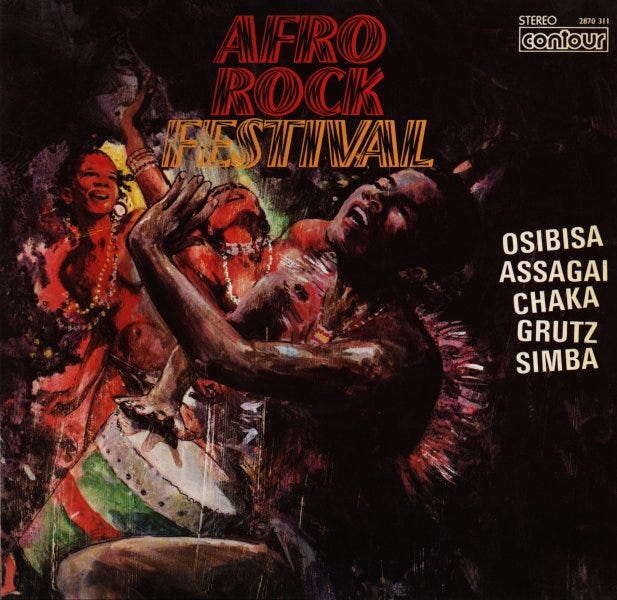
In 1973, a couple of early unreleased tracks would appear on a UK compilation album called Afro Rock Festival, and a few members collaborated with Jade Warrior for a brief session under the name ‘Simba,’ which is also included in the compilation.
Assagai’s music speaks for itself. Their potent, infectiously positive, and hypnotic rhythms strike the perfect balance between jazz, rock, and traditional African music, creating a unique sound unlike anything you have ever heard. I’m thankful their records will continue to be discovered and enjoyed by a new generation of listeners.
And now, fifty-four years later, all that remains to do is do! 2
ENJOY!

Finley Quaye’s half-sister!
The best way to experience these incredible albums is from the original records. However, both are very difficult to find and are also expensive. There are affordable bootlegs of both, but the sound is significantly compromised and inferior on both albums. The versions of Assagai’s first album on Spotify and Apple Music were uploaded using a terrible bootleg with significant distortion and sibilance. The version of Zimbabwe on Apple also comes from a bootleg, which omits an entire channel, and some of the music is lost or low in the mix (it is currently not on Spotify)!
While I don’t know what was used as their source, both YouTube channels linked below sound significantly better than those currently on Apple and Spotify.
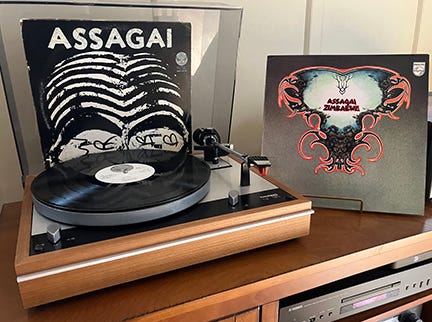
*Post Script: After years of searching for original pressings of both albums, I eventually found beautiful, clean copies! My white label Vertigo US promo copy of the 1st album has a Radio station’s writing on its cover, but the record itself looks virtually unplayed. My original UK Philips copy of Zimbabwe is possibly even better, and I can’t emphasize enough just how much better they sound from the reissues!
This is fantastic Michael, both the music itself and your written praise. I’m currently listening to the first album on Qobuz and really enjoying it. Looking forward to digging into Zimbabwe when I have time to keep YouTube open for the duration. Shame that there’s not another good version out there. Presumably the CD versions (noted as unofficial on Discogs) are also coming from a poor bootleg copy. This feels like an album ripe for a reissue, hopefully someone picks it up.
This is wonderful music. Thanks for writing about it so evocatively, Michael.